An email journey starts with an objective
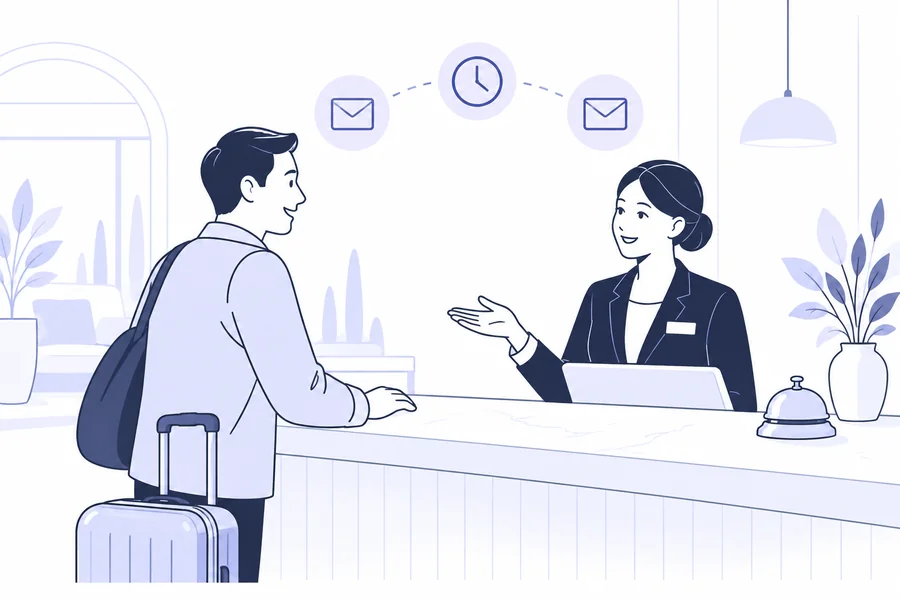
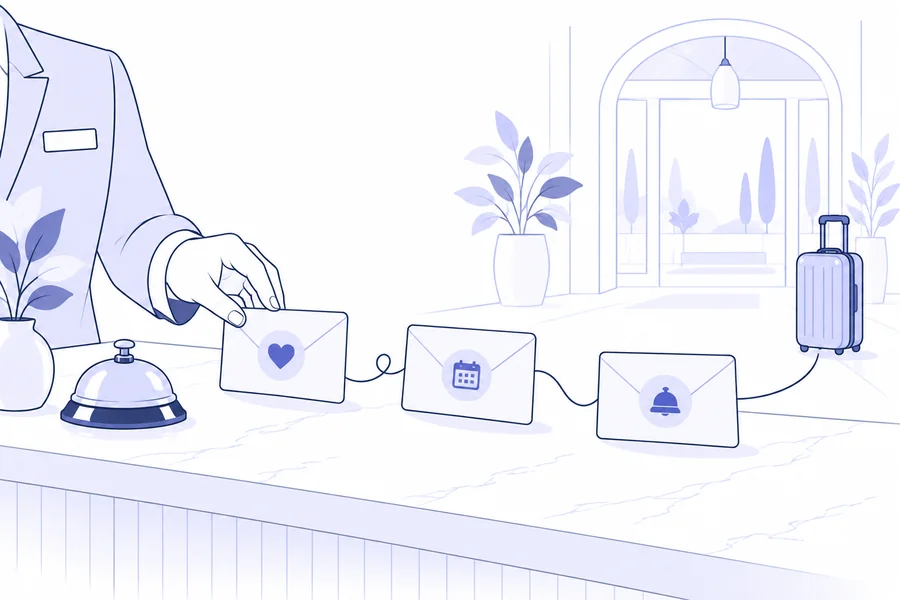
An email marketing funnel is a sequence of communications designed to support a relationship. For a hotel, it can introduce the property to a new contact, prepare for a stay or maintain a relationship with a past guest. It does not necessarily require many messages.
Before writing, choose a specific goal: for example, introducing a seasonal offer to interested past guests or answering common pre-arrival questions. Different goals require different recipients and content; mixing them makes it difficult to understand what worked.
Distinguish service from promotion
A booking summary and a commercial newsletter serve different purposes. Even when addressed to the same person, they must follow their respective sending conditions. An address collected during a stay is not automatically available for every campaign.
Organise consent, unsubscribes and lists before activating the journey. Loyalty enrolment, check-in completion or replacing an OTA alias must not be treated as implicit proof of marketing consent. The software’s technical operation needs property procedures appropriate to the type of communication.
Divide the journey into useful moments
You can plan around four moments, selecting only those that are relevant:
- First contact: answer the enquiry and make the next step clear.
- Before arrival: send practical information about the confirmed stay.
- After departure: thank the guest and collect feedback on the experience.
- A future opportunity to return: present a relevant offer to recipients eligible for promotional communications.
These are not four mandatory emails. Someone already talking to reception may not need another follow-up. A changed booking requires updated data before any message about dates.
Create meaningful groups
Sending to everyone simplifies selection but rarely makes content more relevant. Start from reliable information: language, stated preferences, recorded spending, average stay length and booking count. Do not mistake a single stay for an established preference.
Frequent returning guests can receive a different message from contacts who have only requested a quote. The offer should differ too: the first group knows the property, while the second may need to understand its location and services.
With FastReply mailing lists and newsletters you can work with static or dynamic groups. Dynamic lists update periodically: do not treat them as an instantaneous selection when scheduling a campaign.
Turn the sequence into verifiable rules
For each message, specify recipients, entry condition, delay, content and exclusions. Then check which conditions are actually available in the product with the active components. Not every marketing idea corresponds to an event usable as a trigger.
FastReply automation distinguishes offers, guests and bookings. Rules are evaluated periodically, every 30 minutes, and sends pass through a queue: they do not promise an immediate response to an event. A guest funnel can include sending an email and moving the contact to the next list, depending on configuration.
Before activation, check the affected records and test with internal contacts. Also check what happens when a booking is cancelled, data changes or a contact leaves a list. Do not assume exclusions you have not configured and verified.
Measure the sequence and remove what is unnecessary
Monitor deliveries, unsubscribes, replies and results attributable to campaigns using available data. Detected opens are a technical signal, not proof of human reading. Booking attribution also depends on connected systems: do not automatically credit every subsequent booking to the latest email.
Read guest replies. If they ask questions already covered in the message, clearer wording may be needed. If workflows overlap, reduce communications. A sustainable journey leaves room for conversation and lets the team act when circumstances change.
FROM READING TO PRACTICE
Build relevant lists and messages
Explore recipient selection, newsletters and sending management.
Learn more →